S
fr

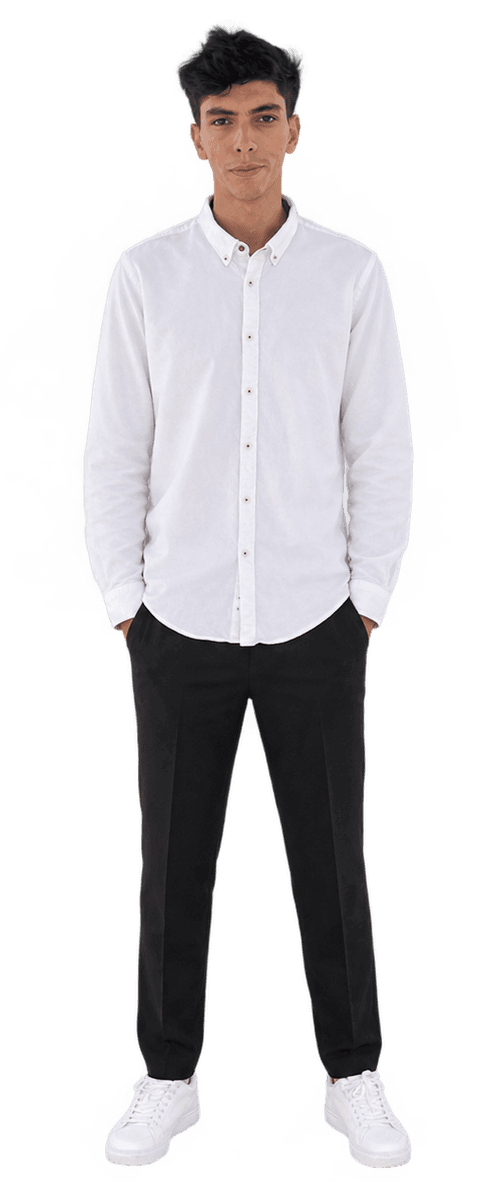
Hi, I am

Sadok Aziz Ben Younes

AI & LLM Engineer

Building intelligent systems, AI agents and production-grade software.

  • AI / LLM systems
  • Multi-agent architectures
  • RAG systems
  • MLOps / LLMOps
  • Backend engineering
  • Full-stack development
Sadok Aziz Ben Younes

About

Software engineering and AI, treated as one discipline.

I graduated from ENSI in September 2026 with an engineering degree in computer science. Across three internships I built the same thing in different shapes: an AI system that has to survive contact with real users. A voice assistant answering in real time. A vision pipeline reading a live traffic feed. Agent tooling that lets a model act on a calendar and an inbox.

The interesting problems were rarely in the model. They were in the orchestration, the failure modes, the cost of a slow response, and knowing whether a new version was actually better than the one it replaced. That is the work I want more of.

How the layers stack

  1. AI Engineering

    Turning a capability into a component with a contract.

  2. LLMs

    Prompting, fine-tuning and quantisation, chosen by constraint.

  3. Agents

    Graphs of specialised steps instead of one prompt doing everything.

  4. Data

    Retrieval, feature pipelines and versioning that make results reproducible.

  5. Production Systems

    Latency budgets, observability, CI, and a deliberate path to release.

Experience

Where the systems were built.

Three internships, each one further up the stack from model to product.

  1. Key achievements

    • Built Voice Vibe, a real-time voice assistant plugin. A single prompt handling a whole spoken conversation is slow and impossible to debug, so I split it into six specialised LangGraph agents composed as a graph, wired over a WebSocket STT/TTS pipeline, with every stage observable so a bad turn traces to one node.
    • Measured end-to-end latency at roughly 975–1020 ms p50, voice in to voice out, with all six agents running on every turn.
    • Benchmarked that against five production voice platforms to locate the real bottlenecks rather than the assumed ones.
    • Designed an end-to-end MLOps pipeline (CRISP-DM) for a suggestion-acceptance recommender, with leak-free feature engineering and calibrated LightGBM and logistic regression models tracked in MLflow and DVC.
    • Shipped a deterministic promotion gate — shadow, then gate, then promote — so no model version reached production unmeasured.
    • Hardened the service with prompt-injection defenses, WebSocket rate limiting, and a GitHub Actions pipeline running automated tests and dependency audits.

    Voice Vibe latency benchmark

    SystemArchitectureEnd-to-end latency
    OpenAI Realtime / GPT-4o voicenative speech-to-speech< 400 ms
    Retell AIcascade≈ 600 ms
    Vapicascade≈ 700–1500 ms
    Pipecat / LiveKit Agentscascade≈ 750–950 ms
    Voice Vibecascade + multi-agent≈ 975–1020 ms (p50)
    Synthflowcascade≈ 1800 ms
    End-to-end latency, voice in to voice out. Native speech-to-speech models skip the STT and TTS hops entirely, which is why they sit below every cascade system here. Voice Vibe is the only entry running a six-agent graph on each turn.
    • FastAPI
    • LangGraph
    • PostgreSQL
    • LightGBM
    • MLflow
    • DVC
    • Docker
    • GitHub Actions
    • pytest

Selected work

Two systems, taken from problem to production.

Each one is written up as a case study: what the problem actually was, what I built, and what it changed.

Computer vision · Real-time systems

2025

Intelligent Traffic Monitoring

Vehicle detection, tracking, plate capture and homography-based speed estimation from video.

Problem

A speed measured in pixels is not a speed, and detection alone loses a vehicle the moment it passes behind a larger one. Without identity across frames and a mapping from the camera view to real distance, none of the numbers a traffic operator needs can be trusted.

Contribution

I built the pipeline end to end: YOLOv8 detects vehicles, ByteTrack holds their identity across frames, a second YOLOv8 model finds plates inside each vehicle crop, and a nine-point homography converts pixel positions into real-world coordinates so speed becomes an actual measurement. Violations are then flagged against limits that differ per vehicle type.

FPS sustained
0FPS sustained
speed estimation accuracy
98.6%speed estimation accuracy
point homography calibration
0point homography calibration
  • YOLOv8
  • ByteTrack
  • Supervision
  • FastAPI
  • WebSocket
  • Redis
  • Celery
  • Streamlit
  • Prometheus
  • Grafana
  • MLflow
  • Docker
  • pytest

Architecture

Ingest
  • video upload
  • FastAPI
  • Redis queue
  • Celery workers
Detect
  • YOLOv8 vehicles
  • ByteTrack
Plates
  • YOLOv8 plate detector
  • quality assessor
  • best-shot storage
Measure
  • 9-point homography
  • outlier rejection
  • per-class speed limits
Observe
  • Prometheus
  • Grafana
  • MLflow
Present
  • Streamlit
  • WebSocket updates

Multimodal · Accessibility

2025

Sign Bridge

Speech, text and video translated into sign language by a 3D avatar.

Problem

Sign language is not a word-for-word encoding of speech. A literal transcription produces something a deaf user cannot read, so translation has to happen at the level of meaning.

Contribution

I built it as two systems. A FastAPI backend normalises speech, text and video into one representation and maps it to sign gloss through a BERT-based NLP stage, with Whisper handling transcription when the input is spoken. A Unity client then animates a 3D avatar from OpenPose-derived keypoints.

sentences in vocabulary
32ksentences in vocabulary
individual words
4kindividual words
input modalities
0input modalities
  • FastAPI
  • Whisper
  • BERT
  • Transformers
  • OpenPose
  • Unity
  • NLTK
  • PostgreSQL
  • Pandas

Architecture

Input
  • speech
  • text
  • video
Transcribe
  • Whisper STT
Understanding
  • BERT
  • NLTK
Mapping
  • sign gloss
  • OpenPose keypoints
Render
  • Unity 3D avatar

Approach

How I build.

Five principles that survive contact with production.

Architecture

Design modular systems with explicit boundaries, so a component can be replaced without a rewrite and a failure isolates to one place.

AI Engineering

Treat a language model as a component with a contract, not a black box that gets prompted harder when it misbehaves.

Performance

Measure latency, throughput and resource use before optimising. The slowest stage is rarely the suspected one.

MLOps

Track experiments, data and model versions so a result is reproducible, and gate releases so a regression is caught before users find it.

Security

Validate at the boundary, isolate execution, and instrument enough to notice when something is wrong.

Skills

The stack I actually reach for.

Grouped by the layer of the system they belong to.

AI / Machine Learning

Agent graphs, retrieval, transformers and vision models.

  • LangGraph
  • LangChain
  • RAG
  • Multi-Agent Orchestration
  • Transformers
  • BERT
  • PyTorch
  • YOLO
  • OpenCV
  • ByteTrack
  • Mistral
  • DeepSeek
  • Scikit-learn
  • LightGBM

Backend

Services, transports and the data stores behind them.

  • Python
  • FastAPI
  • Spring Boot
  • Java
  • WebSocket
  • PostgreSQL
  • MySQL
  • DynamoDB
  • Redis
  • Celery

Frontend

Typed interfaces over the systems above.

  • Next.js
  • React
  • TypeScript
  • JavaScript
  • Angular
  • Tailwind CSS

MLOps / LLMOps

Experiment tracking, versioning, CI and release gates.

  • MLflow
  • DVC
  • ZenML
  • Docker
  • GitHub Actions
  • CI/CD
  • Prometheus
  • Grafana
  • pytest

Cloud / Infrastructure

Where it runs, and what it costs to keep running.

  • AWS
  • AWS Lambda
  • Linux
  • CUDA
  • Google Gen AI Toolbox
  • Google Colab

Contact

Open to AI and LLM engineering roles.

Based in Sousse, Tunisia — open to remote and relocation. The fastest way to reach me is email.

Education

  • Engineering Degree in Computer Science

    ENSI, Manouba

    2023 — 2026

  • Preparatory Scientific Cycle — Mathematics and Physics

    ESSTHS, Hammam Sousse

    2021 — 2023

Languages

  • EnglishAdvanced
  • FrenchAdvanced
  • ArabicNative